
The Brutal Reality of Bodyweight Training
And all the reasons you shouldn't bother

The first time I saw a girl doing a pull up on Instagram, I distinctly remember thinking she just looked sooooo badass. Naturally, my next thought was, ‘I wonder if I can do that, surely it can’t be too hard’?
To give myself credit, it’s pretty ballsy as a former overweight, completely untrained and sports inept individual to assume I could do that but regardless, on a random afternoon I caught the lift to my apartment buildings gym to confirm my natural prowess and look just as cool as the girl in the video.
It doesn’t take a genius to work out where this story is going. I was in genuine shock when not only could I not do a single pull up but in fact I could not even hang on the bar.
I’m pretty sure from that moment on I went through the seven stages of grief. Shock, denial, pain and guilt, anger and bargaining, depression, the upward turn, and then finally acceptance that actually this was pretty damn hard. A cycle that I still regularly go through because despite calisthenics now being my job I still relate to that girl all those years ago.
And that’s the tricky thing about calisthenics. From the outside, it looks simple… no weights, no machines and making gravity look like it doesn’t exist, but no doubt if you’ve tried any bodyweight exercises you’ll know that gravity is still very much at the party. So if you’re stuck somewhere in the middle of the wtf cycle let me explain why it’s a CALISTHENICS, and not a YOU thing.
Why Calisthenics Feels So Hard at the Start (but in reality always)
So let’s do a little recap to understand why calisthenics feels harder than traditional weights training
1. You can’t adjust the load as easily
In the gym, you can drop to lighter dumbbells or slide the pin down the stack. With calisthenics, your body is the weight, and gravity doesn’t negotiate. That means the entry point for moves like push-ups or pull-ups can feel much higher than for, say, a bicep curl which you can easily modify.
2. Leverage matters
In weight training, your leverage stays fairly constant the barbell moves in a straight line from A to B. In calisthenics, body position dramatically changes the difficulty. Move your feet back just a little in an incline push-up, and suddenly the load feels twice as heavy. Gymnasts exploit this, but for beginners it can feel like a cruel trick.
3. You need total-body control
Most weighted lifts let you isolate a muscle group. Calisthenics rarely does. A pull-up isn’t just your lats, it’s your grip, core, and even your damn glutes are getting involved. If one link in the chain is weak, the whole movement falls apart.
4. Stability is built in
Machines guide you through fixed patterns. Calisthenics doesn’t. Even a simple plank forces your stabilisers to fire, which makes the same ‘weight’ feel harder than it would on a chest press machine.
5. Range of motion is often greater
A bodyweight squat usually goes deeper than a leg press. A dip takes your shoulders lower than most gym presses. That extra range of motion is great for mobility and strength, but it makes the movement feel tougher and takes no prisoners when it comes to weak spots.
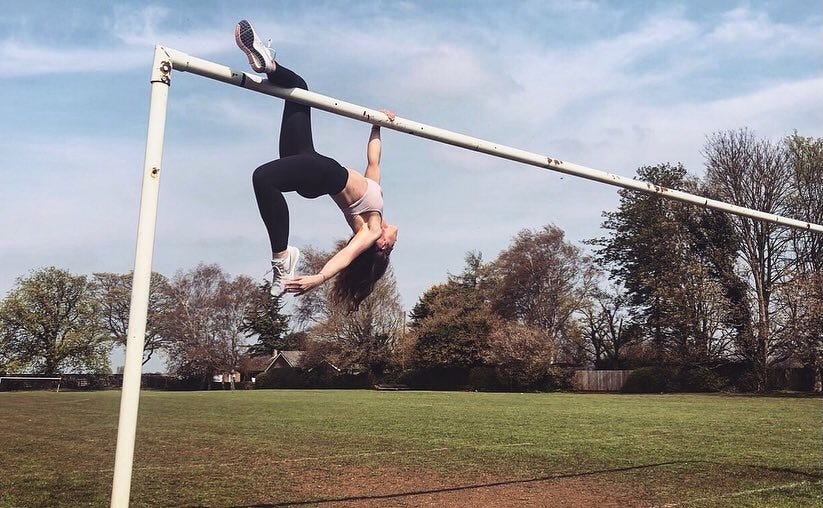
So That’s The Science But This Is What No One Is Talking About
The true challenge that Ive seen affect everyone from clients who are just starting their fitness journey to some of the strongest people I know is the hit to your ego.
The thoughts ‘If I can’t do a push-up why am I bothering’, ‘ Everyone else makes it look effortless, what’s wrong with me?’, ‘This is supposed to be just the beginner version of the exercise’. I could go on (because I’m talking from experience), but I won’t because I’m sure we’ve all been there.
That spiral can stop people before they ever build momentum. And it’s why it’s so tempting to just give up.
The Secret That No One Wants To Hear
Ultimately calisthenics is a hard form of training. Not only is it going to test your strength but it’s going to test your mental strength and your patience. That being said every skill in calisthenics is made up of smaller, trainable pieces.
Push-ups: Start with inclines on a bench or countertop. Each week, bring your hands a little closer to the floor.
Pull-ups: Use a band, or practice negative reps (jump to the top, lower slowly).
Dips: Begin with bench dips, knees bent, before progressing to parallel bars.
Each step is like a rung on a ladder but sometimes those rungs are so close together you have to squint super hard to see them but nevertheless climbing one rung higher is still progress.
Jokes aside, progress with calisthenics is slow and often subjective. Get used to feeling likes it’s two steps forward and one step back and drop the expectations. That way you can actually enjoy all the amazing parts of calisthenics that make it all sooooo worth while.
The Good Part
Everyones learning and eager to help everyone else. I met some of my best friends through calisthenics and it’s a family like no other. No matter how good you get everyone is being humbled by calisthenics whether they’re learning their first pull up or unlocking a manna 🫠.
The fact it takes time is what makes it so satisfying when you eventually unlock a new skills. Just imagine how good it feels working for over a year for just one rep and finally doing it. I rarely cry but it’s something that’s bought me to tears on a few occasions.
You WILL get mad strong. Bodyweight strength is a different type of strength - period.
It’s fun! You can do it anywhere, wearing anything, at any time. You can get inventive, get your children involved, do silly things. It doesn’t have to be serious. Remember those days as a kid doing the monkey bars…
The Takeaway
Calisthenics feels impossible at first because it demands more than just brute strength. It’s about leverage, control, stability, and mobility and mental endurance all at once.
But that’s also why it’s so rewarding. Once you master the basics, you’re not just stronger, you’re more connected to your body and you may just have a sick new party trick too 🤸🏻♀️.
I’ve broken down beginner regressions step-by-step in this video but also have loads more videos and follow along workouts if you are interested in calisthenics. And if you want a structured roadmap that takes you from “can’t do a push-up” to real calisthenics skills, my Calisthenics programs inside my Playbook app were built exactly for you. Happy training crew! 🩵